India on Monday announced closure of negotiations for a free trade agreement signed with New Zealand, its 18th deal so far as the country aims to boost bilateral trade and investments. The India-New Zealand FTA is expected to be signed in the next three months and it is likely to come into force next year.

India finalised a free trade agreement with the UK, its 16th so far as the country aimed at boosting bilateral trade and investments. The other regions and countries with which India has signed such agreements include the four-nation European bloc EFTA, Japan, Korea and Australia.

Next week's three-nation foreign tour of Prime Minister Narendra Modi will see India and Oman sign a free trade deal. The visit will also pave the way for agreements with Ethiopia and Jordan to increase India's bilateral trade and investments.
India and the UK will sign a free trade agreement on Thursday in London that will allow export of labour-intensive products such as leather, footwear and clothing at concessional rates, while making imports of whisky and cars from Britain cheaper. The pact also helps double trade between the two economies to $120 billion by 2030.


'There is a lot of euphoria in the country after a trade agreement is signed. But it is an illusion for us. What is more important is making it real.'
India has successfully negotiated the protection of its steel export interests under the free trade agreement with the UK, ensuring 85 per cent of its outbound shipments remain outside Britain's steel safeguard measures. This consensus addresses a key sticking point ahead of the comprehensive economic and trade agreement (CETA) coming into force on July 15.

The Indian government informed Parliament that India and the US are engaged in negotiations for a mutually beneficial multi-sectoral bilateral trade agreement. The two countries also cooperate on strategic, economic, and defense matters, managing divergences through high-level dialogues.

India and the European Union are set to announce on January 27 the conclusion of negotiations and finalisation of a free trade agreement, which is aimed at boosting economic ties between the two regions amid disruptions in global trade due to US tariffs, an official said.

Signing of the two pacts -- FTA in services and investments -- were scheduled during the India-ASEAN Economic Ministers meeting in Myanmar last week. But the meeting was postponed as Commerce and Industry Minister Nirmala Sitharaman was not able to attend the meet due to domestic compulsions.

Prime Minister Narendra Modi on Thursday said the India-UK free trade pact will boost MSMEs and create jobs, and exuded confidence that the target of doubling bilateral trade will be achieved ahead of the target date of 2030.
The India-Oman free trade agreement, operationalised on June 1, is set to create significant export opportunities for India's labour-intensive and value-added sectors, including textiles, gems and jewellery, and marine products, while also strengthening energy security.

India on Thursday signed a free trade agreement, officially dubbed as the Comprehensive Economic and Trade Agreement (CETA), with the UK - its 16th trade pact so far - as the country aims to boost bilateral trade and investments.

Prime Minister Narendra Modi announced that the India-UK Comprehensive Economic and Trade Agreement (CETA) will come into effect on July 15, 2026, anticipating a significant boost to bilateral trade and investment.
Prime Minister Manmohan Singh, during his visit to the 13th Asean summit held at Singapore in November 2007, had indicated that India would take a flexible stand in the FTA talks.

'We have got Brexit done and we can now take full advantage of the fantastic opportunities available to us as an independent trading nation, striking trade deals with other partners around the world,' Downing Street said in a statement.

The Gulf Cooperation Council (GCC) countries and India are expected conclude a free trade agreement for boosting trade within a year, K K M Kutty, former chairman of industry chamber CII (southern region), has said.

India and New Zealand have signed a comprehensive Free Trade Agreement (FTA) aimed at significantly boosting bilateral commerce and investments, providing duty-free access for 100 per cent of India's exports to New Zealand and securing duty-free inputs for India's manufacturing sector.
The Free Trade Agreement between Peru and China was signed on April 28. For China, Peru is an important source of minerals, primarily copper. For Peru, increasing trade with China is a key way of diversifying the export economy toward an area of dynamic demand.

Industry bodies representing alcoholic beverage manufacturers have welcomed the India-UK Free Trade Agreement (FTA), which will see tariffs on UK whisky and gin reduced, boosting bilateral trade and supporting premiumisation. However, domestic manufacturers are calling for state governments to withdraw concessions currently enjoyed by imported liquor brands.

Finance Minister Nirmala Sitharaman on Saturday said India is looking for a "good" trade agreement with the US to promote economic growth and ensure smooth supply chains. She also said that amid a growing global tariff war, India will have to move "smartly" to guard against possible dumping of goods from countries that are facing higher US tariffs.

Among the current FTAs with significant trade deficits for India, five are with countries from the 10-nation Asean bloc. Exports to the 10 economies stood at $ 37.4 billion in 2018-19, up by 9% year on year. On the other hand, imports were higher at $ 59.31 billion, up by 25% from the previous year's $ 47.13 billion.

Commerce and Industry Minister Piyush Goyal announced that India expects to operationalise nine free trade agreements (FTAs) within the next 10 months, with plans for an additional three to four significant pacts over the coming year, reinforcing India's ambition to become a global manufacturing and investment hub.

The World Bank has increased India's economic growth projection for FY27 to 6.6 per cent, citing resilient domestic demand, while simultaneously cutting its global economic growth outlook due to the conflict in West Asia.
India's exports recorded a 13.78 per cent increase to USD 43.56 billion in April, marking the highest monthly outbound shipments in over four years, primarily driven by petroleum products. However, the trade deficit widened to a three-month high of USD 28.38 billion due to a 10 per cent rise in imports.
India and New Zealand are poised to sign a free trade agreement (FTA) on April 27 in New Delhi, aiming to provide tariff-free access for Indian goods to New Zealand's market and attract USD 20 billion in investment over the next 15 years.

India has strongly refuted claims by the United States Trade Representative (USTR) regarding excess capacity in its steel and textile sectors, arguing that the nation's significantly low per capita consumption of these products contradicts such assertions, according to Amitabh Kumar, Additional Secretary in the Ministry of Commerce.

The Indian government has imposed import restrictions on all forms of gold, silver, and platinum articles to prevent misuse of free trade agreements (FTAs). The restrictions apply immediately, regardless of prior contracts or commitments.

A delegation of Indian startup founders and leaders visited the UK to explore collaborations in artificial intelligence and technology, aiming to strengthen the India-UK innovation corridor.
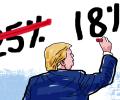
Several farmer organisations in India are protesting the proposed India-US trade deal, expressing concerns about its impact on the agriculture sector and demanding the resignation of the Commerce Minister.
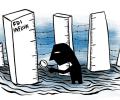
India's foreign direct investment (FDI) inflows are projected to surpass $90 billion in 2025-26 (FY26), driven by robust policy reforms, free trade agreements, and strong economic growth, according to DPIIT Secretary Amardeep Singh Bhatia.

Prime Minister Narendra Modi has called for a swift end to the conflicts in West Asia and Ukraine, emphasising the importance of dialogue and diplomacy. He made the remarks after talks with Finnish President Alexander Stubb, where they also agreed to a strategic partnership in digitalisation and sustainability.

An innovation roadmap, a mechanism to double annual bilateral trade within next five years, and a joint artificial intelligence framework were among 13 outcomes to emerge from wide-ranging talks between Prime Minister Narendra Modi and President Emmanuel Macron on Sunday.

From the 30-Sensex firms, Bharat Electronics surged nearly 9 per cent post its December quarter earnings. Eternal, Bajaj Finance, Power Grid, Trent, Mahindra & Mahindra and UltraTech Cement were the other major gainers. Maruti, Sun Pharma, Infosys and Bharti Airtel were among the other laggards.

European Commission President Ursula von der Leyen says India and the EU are close to a 'historic trade agreement' that could create a market of two billion people and account for almost a quarter of the global GDP.

The Congress attacked the Modi government, saying it now seems to be routine that India learns about its government's actions only from Trump or his appointees.
